Can you think of life without cooling? Sweltering heat waves that can melt the rubber on your shoes, prepare an egg on the dashboard of your vehicle, and make it almost difficult to have a great night's rest-- sounds miserable!
Let's face it, life without A/C would not be the very same. Did you understand, that prior to the 20th century, ice was really collected for refrigeration? It was cut into 1-ton blocks, provided throughout the nation and utilized in 'ice-boxes' to keep food fresh. Luckily today, refrigeration has actually been drastically enhanced considering that its intro in 1834.
By knowing how your home's A/C system works, you'll be able to make it run better and longer, and if it should break during the pet dog days of summertime, more confident finding a replacement.
What is Central Air Conditioning?
Considering that the 1960s, central air conditioning systems have been the most common design of cooling in America.
Best defined by the condenser system outdoors and ducts carrying cool air throughout the house, a central air conditioning is sometimes referred to as a "split-system" due to the fact that the indoor and outside components are separated.
How It Works
Comparable to how a sponge absorbs water, central air conditioning conditioners absorb the heat from inside the home and eject it outside through a procedure called "the refrigeration cycle."
It's simple to comprehend how an air conditioning unit works when you see how the parts operate together.
Parts of an A/c System
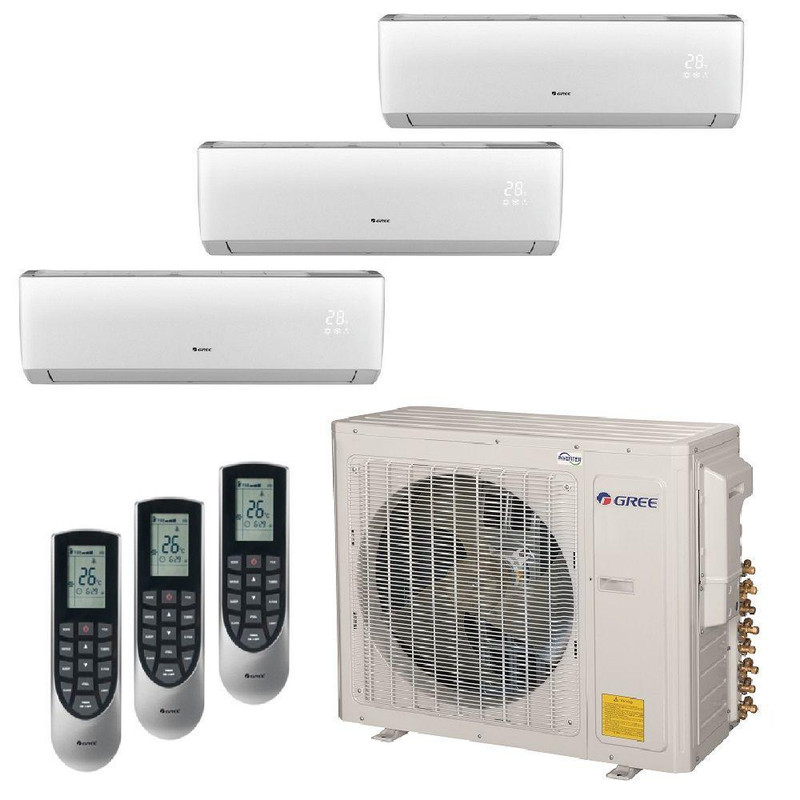
Split into two parts; a system will consist of an outdoor condenser system (below) and a coil housed on top of the furnace or inside air handler. The outdoor condenser, which does the majority of the work, operates in tandem with the air handler/furnace that distributes the conditioned air into rooms of your house.
The Refrigeration Cycle
The cooling procedure starts when the thermostat spots the interior temperature level has actually increased above the setpoint. It signals the control panel in the air handler and goes into action.
1) The internal blower attracts the hot, moist indoor air from the return ducts into the air handler/furnace cabinet to be conditioned.
2) Dirty air getting in the cabinet first goes through an air filter that traps dirt and particles.
3) The tidy air then passes through the evaporator coil. Using metal fins to increase its surface area, the evaporator coil extracts heat and moisture from the warm air as the air passes through it. The tidy, cool air is distributed throughout the home.
4) A set of copper tubes containing refrigerant, called a Line Set, connect the indoor coil with the outside condenser.
5) The condenser dissipates the heat trapped inside the line originating from the evaporator coil by biking it through its coils where a fan on top pushes air to speed up the procedure. The refrigerant is then compressed and takes a trip back to the indoor evaporator coil, where the cooling procedure continues.
HEATING AND COOLING Cheat Sheet
It's an excellent idea to acquaint yourself with the technical language used by HEATING AND COOLING experts to understand your system when it concerns making repair work or buying a new system.
A/C - Represents heating, ventilation, and cooling. This acronym is utilized to categorize all equipment utilized to manage air temperature, humidity, and air quality.
Split-System - In reference to parts of the system running both inside and outdoors. In a split system, the condensing unit is found outside.
BTU - British Thermal Units - a measurement of how much heat can be gotten rid of from the air in an hour.
Ton - A measurement that refers to the cooling capacity your unit can offer under normal conditions. 1 Load amounts to roughly 12,000 BTU's. Heaps are frequently used when sizing an unit for your home, which can be figured out based upon the square video required to be cooled or warmed.
Unmatched Expertise
Easily, the heater, a/c, and electrical systems all work immediately, without us needing to fumble around in the basement or worse, a hot attic. free ac assessment Till something fails.
Finding out about heating and cooling - Air Conditioning Edmonton your cooling system may appear frustrating at initially, once you have the fundamentals down, you'll be able to understand not only how your system works, however also analyze jargon to make buying a replacement simple.