Can you imagine life without cooling? Sweltering heat waves that can melt the rubber on your shoes, cook an egg on the dashboard of your automobile, and make it almost impossible to have a great night's rest-- sounds miserable!
Let's face it, life without A/C wouldn't be the exact same. Did you know, that prior to the 20th century, ice was in fact gathered for refrigeration? It was cut into 1-ton blocks, provided throughout the country and utilized in 'ice-boxes' to keep food fresh. Fortunately today, refrigeration has been drastically improved considering that its intro in 1834.
By understanding how your home's A/C system works, you'll have the ability to make it run better and longer, and if it must break during the dog days of summer season, more positive discovering a replacement.
What is Central Air?
Because the 1960s, main air conditioning systems have been the most common style of cooling in America.
Finest defined by the condenser system outside and ducts carrying cool air throughout the house, a main air conditioning is sometimes described as a "split-system" because the indoor and outside elements are separated.
How It Works
Similar to how a sponge soaks up water, central air conditioning conditioners absorb the heat from inside the house and eject it outside through a process called "the refrigeration cycle."
It's easy to comprehend how an air conditioning unit works as soon as you see how the parts operate together.
Parts of an Air Conditioning System
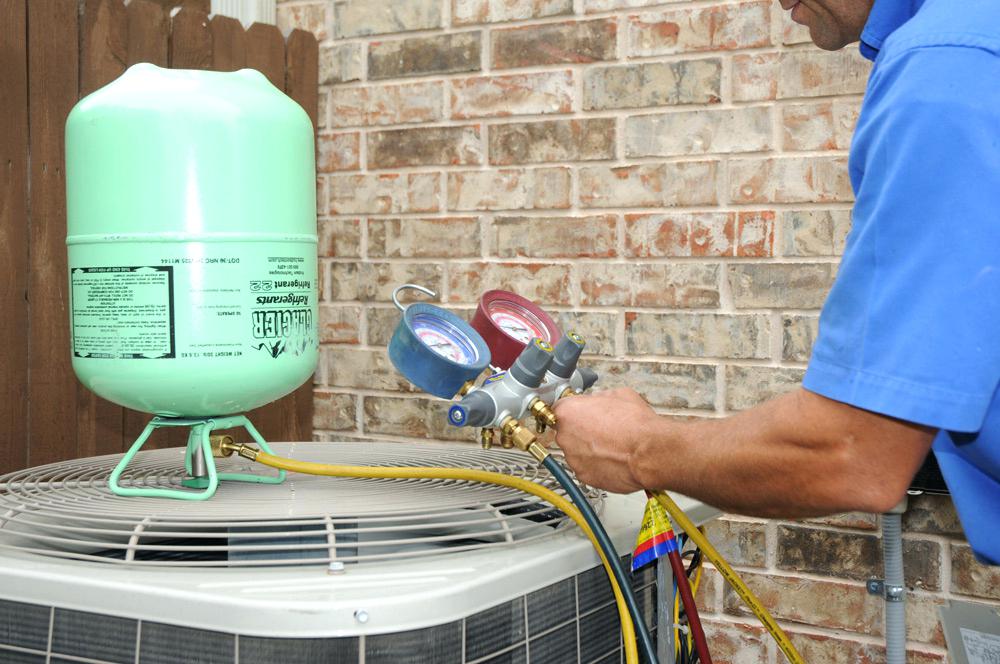
Divide into 2 parts; a system will consist of an outdoor condenser system (below) and a coil housed on top of the heater or inside air handler. The outdoor condenser, which does the majority of the work, operates in tandem with the air handler/furnace that disperses the conditioned air into rooms of your home.
The Refrigeration Cycle
The cooling process starts when the thermostat spots the interior temperature has increased above the setpoint. It signals the control panel in the air handler and goes into action.
1) The internal blower draws in the hot, wet indoor air from the return ducts into the air handler/furnace cabinet to be conditioned.
2) Dirty air going into the cabinet first travels through an air filter that traps dirt and particles.
3) The clean air then goes through the evaporator coil. Utilizing metal fins to increase its area, the evaporator coil extracts heat and moisture from the warm air as the air goes through it. The tidy, cool air new hvac system is distributed throughout the house.
4) A set of copper tubes consisting of refrigerant, called a Line Set, link the indoor coil with the outdoor condenser.
5) The condenser dissipates the heat trapped inside the line coming from the evaporator coil by biking it through its coils where a fan on top presses air to speed up the process. The refrigerant is then compressed and takes a trip back to the indoor evaporator coil, where the cooling procedure continues.
A/C Cheat Sheet
It's a good concept to acquaint yourself with the technical language used by HEATING AND COOLING specialists to comprehend your system when it pertains to making repair work or buying a brand-new system.
HEATING AND COOLING - Stands for heating, ventilation, and cooling. This acronym is utilized to categorize all devices used to manage air temperature, humidity, and air quality.
Split-System - In reference to parts of the system running both inside and outdoors. In a split system, the condensing system is found outside.
BTU - British Thermal Units - a measurement of how much heat can be gotten rid of from the air in an hour.
Load - A measurement that describes the cooling capacity your unit can offer under typical conditions. 1 Lot amounts to approximately 12,000 BTU's. Heaps are often utilized when sizing an unit for your home, which can https://ac-repair-mississauga.ca/about-us/ be identified based on the square video footage needed to be cooled or warmed.
Unmatched Knowledge
Conveniently, the heater, a/c, and electrical systems all work automatically, without us needing to fumble around in the basement or even worse, a hot attic. Until something goes wrong.
Understanding your cooling system might appear overwhelming in the beginning, once you have the essentials down, you'll be able to comprehend not only how your system works, but likewise analyze jargon to make buying a replacement simple.